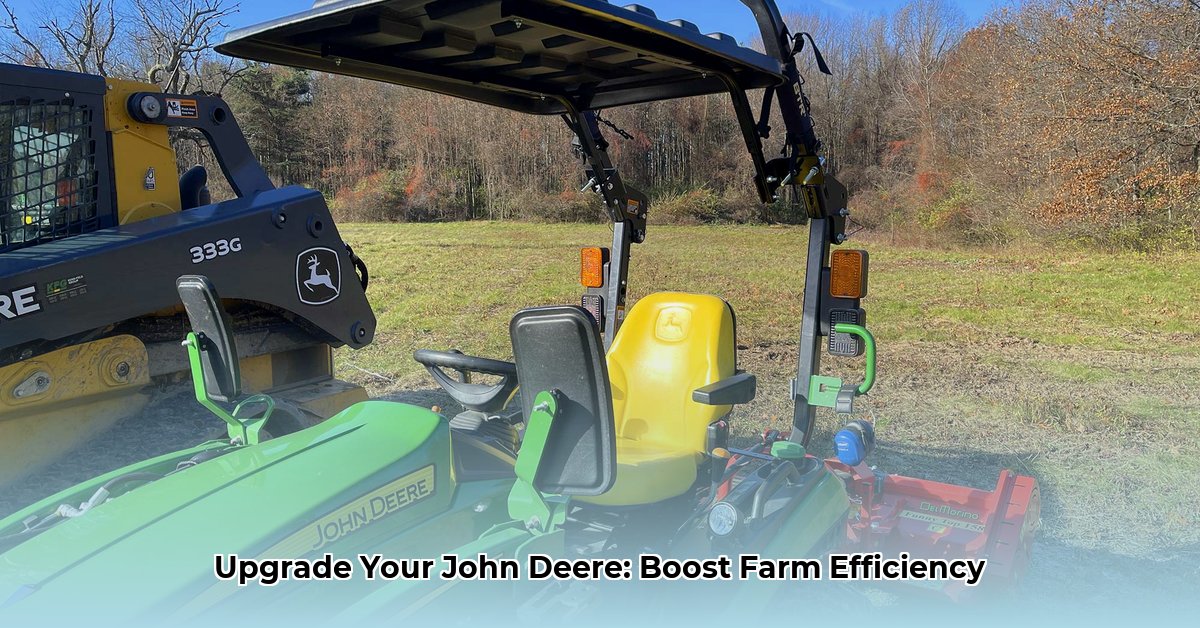
John Deere Tractor Canopy Kits: A Comprehensive Guide for Enhanced Farm Productivity and Sustainability
Finding the right John Deere tractor canopy kit significantly impacts operator comfort, farm efficiency, and even long-term sustainability. This guide provides a comprehensive overview to help you make an informed decision, covering key features, sustainable material choices, and a step-by-step buying process. For alternative options, check out these aftermarket cabs.
Understanding Your Needs: Specifying Your Ideal Canopy
Before embarking on your search, carefully define your needs. Consider the primary purpose: sun protection, rain shielding, or a combination of both. Your budget and the compatibility with your specific John Deere tractor model are also crucial factors. Just like selecting the right work boots, the wrong canopy is an investment poorly spent. What level of weather protection do you require? How much are you willing to invest? Accurate assessment is key.
Exploring Your Options: A Canopy for Every Farming Operation
John Deere offers a range of canopy kits designed for different tractor models and operational requirements. Local John Deere dealers are excellent resources, but online research can broaden your options. Prices vary considerably based on features and materials. Basic sunshades offer minimal protection, while more robust models provide extensive weather resistance. Consider your geographic location and typical weather patterns – a simple sunshade suffices in arid climates, while storm-prone regions demand heavy-duty protection.
Key Features to Prioritize: Beyond Basic Shade
Choosing the right canopy involves careful evaluation of several key aspects:
Material Durability: Fiberglass (lightweight, affordable, but less impact-resistant), steel (robust, heavy, expensive), and aluminum (balanced weight, strength, and cost) are common materials. Consider long-term durability; a more expensive, long-lasting canopy will often prove more economical in the long run, reducing the need for frequent replacements.
Installation Ease: Determine whether you'll install the canopy yourself or hire a professional. Some kits are designed for DIY installation, complete with clear instructions, while others may require professional expertise. This choice impacts both the initial cost and the time commitment.
Uncompromised Visibility: Operator safety is paramount. Ensure the canopy doesn't obstruct your view in any direction, especially while operating in adverse weather conditions. Compromised visibility can lead to hazardous situations.
Essential Ventilation: Effective ventilation is crucial for maintaining a comfortable and safe working environment, especially during hot weather. Proper air circulation helps prevent overheating and fatigue.
Customization Possibilities: Some canopy kits offer customization options, allowing you to add accessories or modify features to better meet your specific needs. However, remember that customization often increases the total cost.
Choosing Your Perfect Canopy: A Step-by-Step Buying Guide
Follow these steps to ensure a sound investment:
Define Requirements: Clearly outline your top priorities: sun protection, rain shielding, budget limits, and tractor model compatibility. Writing these down provides focus.
Research Compatible Models: Explore available John Deere canopy kits designed for your specific tractor model. Compare specifications and read user reviews.
Compare Features in Detail: Carefully evaluate the specifications of different models. Consider materials, installation difficulty, visibility, ventilation, and customization options. A side-by-side comparison (perhaps using a spreadsheet) is helpful.
Evaluate User Reviews: Reviews from other farmers provide valuable insights into real-world performance and durability. Pay close attention to both star ratings and the detailed comments.
Source from Reputable Dealers: Purchase from authorized John Deere dealers. They normally offer installation services, warranties, and ongoing support.
Long-Term Considerations: Beyond Initial Purchase Price
While immediate functionality is crucial, consider the long-term implications:
Durability and Lifespan: Investing in a durable canopy prevents frequent replacements, saving both money and time. A well-constructed canopy should offer years of reliable service.
Environmental Impact: Inquire about the manufacturing processes and material sourcing. Opt for more sustainable materials, like recycled plastics or bio-composites, to minimize environmental impact. Learn about the lifecycle assessment (LCA) of different materials.
Maintenance Requirements: Understand the necessary maintenance procedures for your chosen canopy. Regular maintenance ensures a longer lifespan.
Sustainable Materials: A Growing Concern for Environmentally Conscious Farmers
The agricultural sector is increasingly focused on sustainable practices. Consider the environmental impact when selecting your canopy. Look for options that incorporate:
Recycled Materials: Reducing landfill waste and conserving resources.
Bio-based Composites: Materials derived from renewable agricultural resources, offering an environmentally friendly alternative. A thorough LCA (life cycle assessment) is vital.
Durable, Long-lasting Materials: Minimizing waste by extending the canopy's lifespan.
Locally Sourced Products: Reducing transportation emissions.
Key Takeaway: Prioritizing durability, sustainability, and safety will yield significant long-term benefits, ensuring a more comfortable and productive farming experience. Choosing wisely today equals more efficient operations for years to come.